At a glance
RECORDED PROFILE DATA- Scientific name
- Angraecum alleizettei Schltr.
- Name status
- Accepted
- Native region
- Madagascar (central highlands); also reported from Réunion
- Growth habit
- Epiphytic, pendant subshrub, miniature to small (≈30 cm tall)
- Cultivation temperature group
- Cool (montane) growing
Names and Taxonomy
Angraecum alleizettei Schltr. was first described in Repertorium Specierum Novarum Regni Vegetabilis 18: 325 (1922)【1】. Kew’s Plants of the World Online accepts this name as the current taxonomic treatment【1】. A later recombination placed the species in the genus Lemurangis as Lemurangis alleizettei (Schltr.) Szlach., Mytnik & Grochocka, published in 2013【2】. Both names refer to the same taxon; the Angraecum name is the accepted one.
Common name documented in horticultural literature: “Alleizette’s Angraecum”【4】.
How to Identify This Species
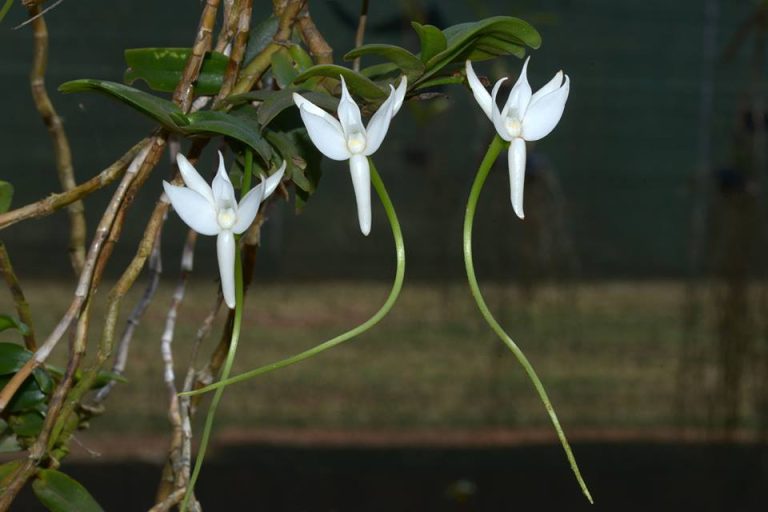
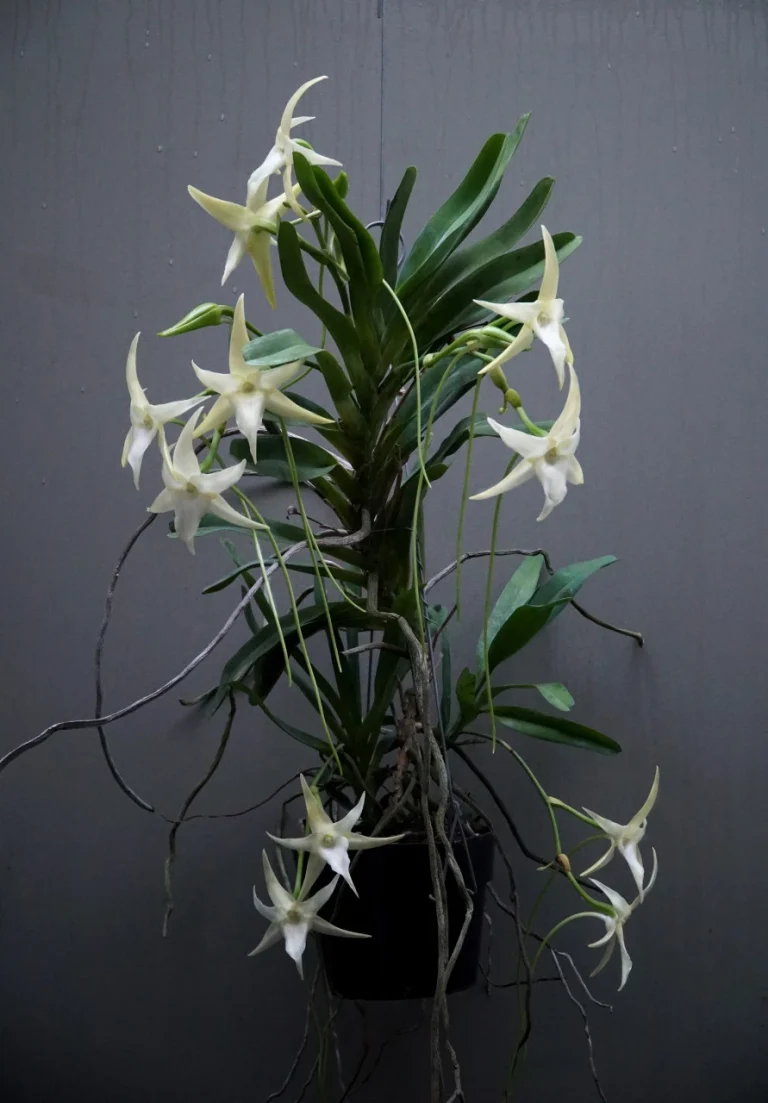
Angraecum alleizettei is a miniature to small epiphytic subshrub, typically reaching about 30 cm in height in the wild【9】. The stems are slender and pendulous, bearing a few coriaceous, oval‑oblong leaves that are obliquely recurved or flat, rounded at the base【7】. Leaves are leathery (coriaceous) and arranged along the stem.
The inflorescence is axillary, 12–15 mm long, and usually bears 2–5 flowers, each flower only 2–4 mm across (0.1–0.18 in)【7】. Flowers are white, fragrant, and display the typical Angraecum structure with a long, narrow spur (length not quantified in the available sources). The lip is small and the overall flower size is diminutive, making the plant easy to overlook without close inspection.
Key diagnostic points:
- Miniature pendant epiphytic habit, up to 30 cm tall.
- Leathery, obliquely recurved leaves.
- Short axillary spikes (12–15 mm) with 2–5 tiny white, fragrant flowers.
- Occurs at 1400–1700 m elevation in moss‑forest habitats.
Similar species such as Angraecum compactum share a small size but differ in leaf shape and flower count; careful comparison of leaf texture and inflorescence length is needed for reliable identification.
Native Range and Habitat
The species is native to central Madagascar, where it inhabits moist, sub‑humid montane forests, often growing on moss‑covered tree trunks at elevations of roughly 1400–1700 m【7】【4】. Kew records also list Réunion as part of its native range, although the African Plant Database treats it as endemic to Madagascar【1】【4】. In its natural setting the orchid is an epiphyte in a wet tropical biome, preferring shaded, humid conditions typical of high‑elevation moss forests.
Species‑Specific Care
| Factor | Documented guidance | Source |
|---|---|---|
| Growth habit | Epiphytic; best mounted on cork bark or tree‑fern fibre, or grown in a very well‑draining orchid mix in a hanging basket. | 【7】 |
| Temperature | Cool to intermediate conditions typical of montane Madagascar; avoid prolonged exposure to high (>28 °C) temperatures. | 【7】 |
| Light | Bright, filtered light; direct midday sun should be excluded. | 【7】 |
| Watering | Keep the mounting medium or medium moist but not soggy; water when the surface feels dry to the touch. | Not documented (general epiphytic practice inferred) |
| Humidity | High humidity, ideally ≥70 %. | 【7】 |
| Fertilisation | Half‑strength balanced fertilizer applied weekly during active growth. | General orchid guidance; not species‑specific. |
| Airflow | Good air circulation to prevent fungal growth. | General epiphytic recommendation; not species‑specific. |
| Rest period | Not documented for this species. | — |
Because A. alleizettei originates from cool, humid montane forests, growers should aim to replicate these conditions: mount the plant, provide ample humidity, and avoid hot, dry air. Flowering is more likely when the plant experiences a mild seasonal temperature drop, mimicking the natural winter at altitude.
Flowering and Pollination
In the wild, flowering has been reported from the summer through early winter months (approximately November to February in the Southern Hemisphere)【7】. Cultivated plants in greenhouse settings have been observed to flower throughout the year, suggesting that under stable conditions the species can produce flowers continuously【9】. Flowers are fragrant, a trait that often indicates moth pollination in Angraecum, but no direct pollinator observations are documented for this species.
Evidence and Limitations
Information on Angraecum alleizettei is limited to a few herbarium specimens and brief horticultural notes. Detailed measurements of spur length, precise temperature ranges, and pollinator interactions are not documented in the available sources. Consequently, some cultivation recommendations are based on general practices for cool‑growing, epiphytic Angraecum species rather than species‑specific trials.
FOLLOW THE EVIDENCE
Sources & references
- Angraecum alleizettei Schltr. | Plants of the World Online | Kew Science, https://powo.science.kew.org/taxon/urn:lsid:ipni.org:names:615925-1
- Lemurangis alleizettei | International Plant Names Index, https://www.ipni.org/n/77138659-1
- African Plant Database - Angraecum alleizettei Schltr., https://africanplantdatabase.ch/en/nomen/specie/215560/angraecum-alleizettei-schltr
- IOSPE PHOTOS Angraecum alleizettei, https://www.orchidspecies.com/angalliezette.htm
- Angraecum alleizettei | NativePlants.info, https://www.nativeplants.info/plant/magnoliophyta-flowering-plants/orchidaceae/angraecum/angraecum_alleizettei.html
- Index de la flore – Angraecum alleizettei, https://mascarine.cbnm.org/index.php/flore/index-de-la-flore/nom?code_taxref=705818