At a glance
RECORDED PROFILE DATA- Scientific name
- Angraecum zeylanicum Lindl.
- Name status
- Accepted (Kew POWO) [1]
- Native region
- Seychelles (Mahé) and Sri Lanka [1]
- Growth habit
- Epiphytic subshrub, wet tropical biome [1]
- Cultivation temperature group
- Not documented
Names and Taxonomy
The accepted scientific name is Angraecum zeylanicum Lindl., first published in Journal of the Proceedings of the Linnean Society, Botany 3: 40 (1858) [1]. Kew’s Plants of the World Online lists it as an accepted name.
Synonyms recorded by Kew include:
- Mystacidium zeylanicum (Lindl.) Trimen – a homotypic synonym [1].
- Angraecum maheense Schltr. ex Diels – a heterotypic synonym derived from material collected on Mahé [2].
No common names are documented in the consulted sources.
How to Identify This Species
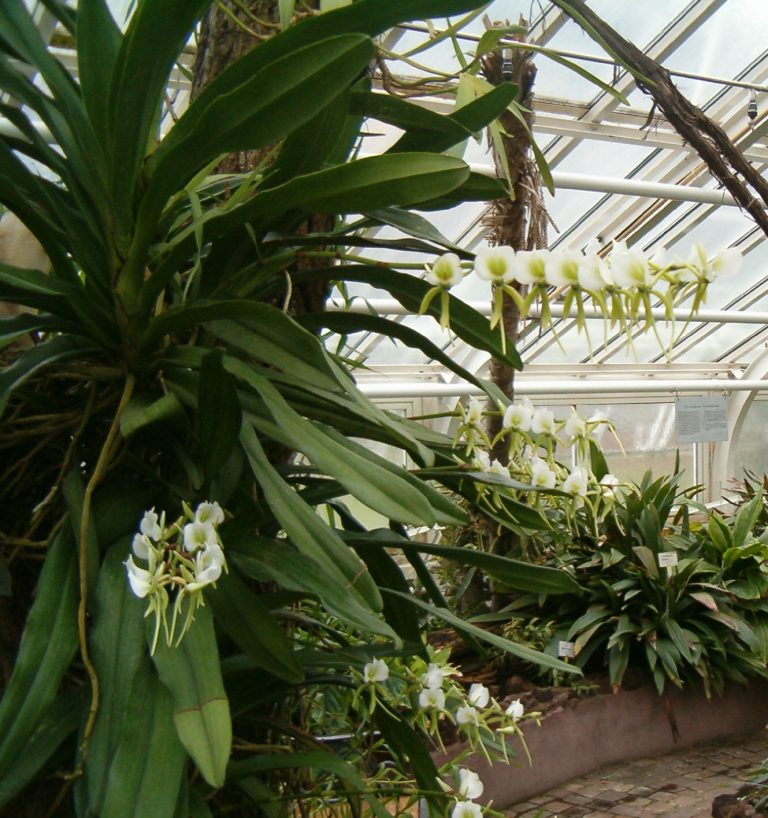
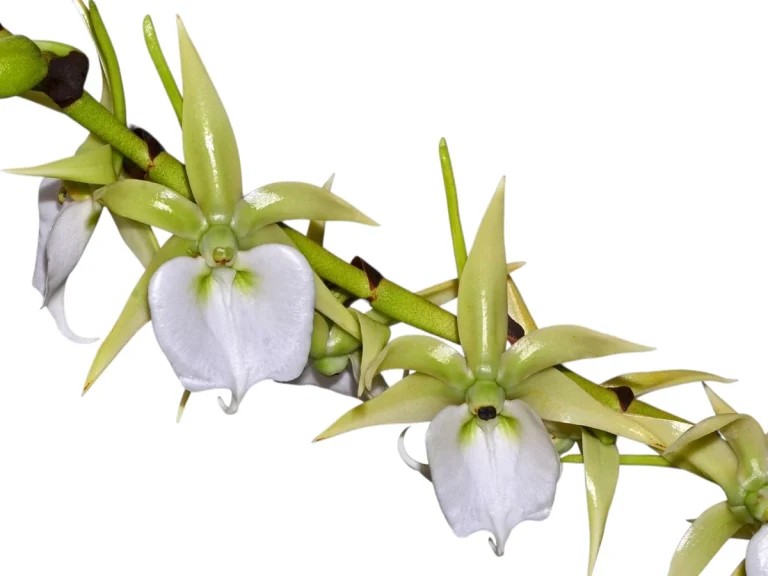
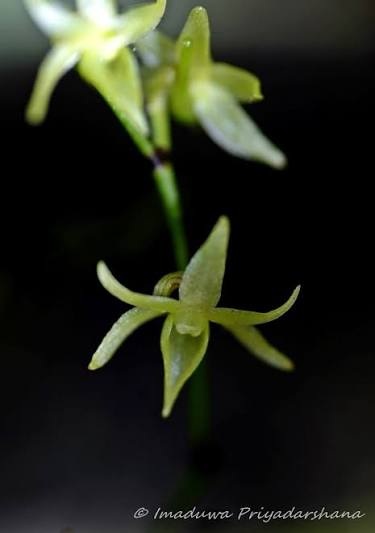
Available literature provides only a brief habit description: the plant is an epiphytic subshrub that occurs in wet tropical forests [1]. Detailed morphological data such as leaf size, stem length, flower colour, spur length, or fragrance are not documented in the sources consulted, so reliable field identification must rely on comparison with herbarium specimens or expert verification.
Native Range and Habitat
Angraecum zeylanicum is native to two locations in the Indian Ocean region:
- Seychelles – specifically the island of Mahé.
- Sri Lanka.
In both areas it grows as an epiphyte on tree trunks or large branches within wet tropical forest biomes [1]. Elevational range, specific host tree preferences, and seasonal phenology are not documented.
Species‑Specific Care
| Factor | Documented guidance | Source |
|---|---|---|
| Temperature | Not documented | — |
| Light | Not documented | — |
| Watering | Not documented | — |
| Humidity | Not documented | — |
| Substrate / mounting | Not documented | — |
| Feeding | Not documented | — |
| Repotting / re‑mounting | Not documented | — |
| Seasonal changes | Not documented | — |
Because no cultivation notes specific to A. zeylanicum are available, growers should treat it as a typical Angraecum species: an epiphytic orchid that prefers high humidity, good air circulation, and moderate to bright indirect light. However, any cultural regime applied should be considered experimental until species‑specific observations are published.
Flowering and Pollination
Information on the timing of flowering, flower longevity, scent, nectar spur morphology, or pollinator interactions is not documented in the sources consulted.
Evidence and Limitations
The profile relies primarily on Kew’s Plants of the World Online for taxonomy and native distribution. Detailed morphological, ecological, and horticultural data for Angraecum zeylanicum are absent from the available online references, limiting the ability to provide a complete identification key, precise cultivation protocol, or pollination biology. Future field studies, herbarium revisions, or grower reports would be needed to fill these gaps.
Frequently asked questions
Is Angraecum zeylanicum considered endangered?
No formal conservation assessment for this species is found in the consulted sources; therefore its threat status is not documented.
Can Angraecum zeylanicum be grown by hobbyists?
Specific cultivation instructions are not available. Growers may start with general Angraecum care guidelines, but any cultural practice should be treated as experimental until species‑specific data are published.
FOLLOW THE EVIDENCE
Sources & references
- Angraecum zeylanicum Lindl. | Plants of the World Online | Kew Science – https://powo.science.kew.org/taxon/urn:lsid:ipni.org:names:616498-1
- Angraecum maheense Schltr. ex Diels | Plants of the World Online | Kew Science – https://powo.science.kew.org/taxon/urn:lsid:ipni.org:names:77236771-1
- Angraecum zeylanicum – PlantaeDB – https://plantaedb.com/taxa/phylum/angiosperms/order/asparagales/family/orchidaceae/genus/angraecum/species/angraecum-zeylanicum
- Clan Orchids – Species compendium (lists native region) – http://www.clanorchids.com/compendium/page3a.html