At a glance
RECORDED PROFILE DATA- Scientific name
- Angraecum chermezonii H.Perrier
- Name status
- Accepted
- Native region
- Madagascar (north‑eastern)
- Growth habit
- Epiphytic subshrub
- Cultivation temperature group
- Not documented
Names and Taxonomy
The accepted scientific name is Angraecum chermezonii H.Perrier. The name was first published in Notul. Syst. (Paris) 7: 107 (1938) and is listed as an accepted species by Kew’s Plants of the World Online.[1] A spelling variant Angraecum chermozoni appears in a Wikipedia species list, but it is not recognised as a separate taxon; it is treated as an orthographic error of the accepted name.[2]
How to Identify This Species
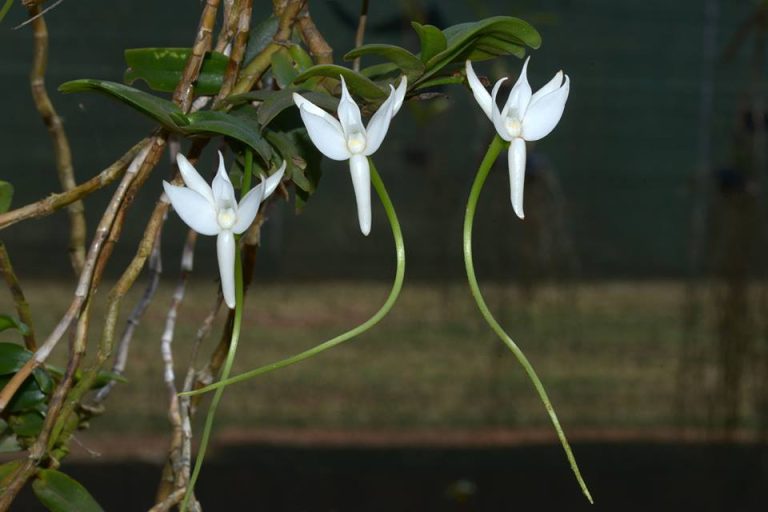
Published sources describe the plant only in very general terms: it is an epiphytic subshrub growing on trees in humid forest. No detailed measurements of stem length, leaf shape, flower colour, size, lip morphology or spur length are provided in the cited references. Consequently, identification in the field must rely on comparison with herbarium specimens or expert‑verified photographs, which are not supplied here.
Native Range and Habitat
The species is native to the north‑eastern part of Madagascar, occurring in the island’s wet tropical biome. It grows as an epiphyte on tree trunks and branches in humid forest, but specific elevation limits, host tree preferences or micro‑habitat details are not documented in the available sources.[1]
Species‑Specific Care
| Factor | Documented guidance | Source |
|---|---|---|
| Growth habit | Epiphytic subshrub; typically mounted or grown in very well‑draining media that mimic tree bark. | [1] |
| Light | Not documented for this species; most north‑eastern Madagascan epiphytes prefer bright, filtered light. | Not documented |
| Temperature | Not documented; the region is warm and humid year‑round. | Not documented |
| Watering | Not documented; epiphytes generally require regular misting and thorough watering when the medium dries. | Not documented |
| Humidity | Not documented; native habitat is a wet tropical forest with high humidity. | Not documented |
| Fertilisation | Not documented. | Not documented |
Because specific horticultural data for Angraecum chermezonii are lacking, growers should start with the general cultural requirements for Madagascan Angraecum epiphytes: bright, indirect light; warm day temperatures (22‑28 °C); high humidity (70 % or more); and a bark‑based medium that dries quickly between waterings. Adjustments should be made based on the plant’s response.

Flowering and Pollination
No published information on flowering time, flower morphology, fragrance, nectar spur length, or pollinator relationships for this species is present in the sources consulted. As with many Angraecum orchids, long spurs and night‑time fragrance are common, but such traits cannot be confirmed for A. chermezonii without further study.
Evidence and Limitations
This profile is based on two publicly available sources: the Kew Plants of the World Online entry for Angraecum chermezonii and a Wikipedia species list that records a misspelled variant. Detailed morphological descriptions, precise habitat parameters, and cultivation guidelines are not documented in those references. Consequently, many sections contain “Not documented” statements, and any horticultural advice is derived from general knowledge of closely related Madagascan Angraecum species rather than species‑specific data.
Frequently asked questions
Is Angraecum chermozoni a different species from Angraecum chermezonii?
The name "Angraecum chermozoni" appears in some secondary lists but is not recognised by taxonomic authorities. The accepted name is Angraecum chermezonii H.Perrier; the former spelling is considered an orthographic error.
Can I grow Angraecum chermezonii in a home greenhouse?
Specific cultural requirements for this species are not published. Growers should apply the general care guidelines for Madagascan Angraecum epiphytes—bright filtered light, warm temperatures, high humidity, and a well‑draining bark medium—while monitoring the plant’s response.
FOLLOW THE EVIDENCE
Sources & references
- Angraecum chermezonii H.Perrier | Plants of the World Online | Kew Science, https://powo.science.kew.org/taxon/urn:lsid:ipni.org:names:616020-1
- List of Angraecum species | Wikipedia, https://en.wikipedia.org/wiki/List_of_Angraecum_species