At a glance
RECORDED PROFILE DATA- Scientific name
- Angraecum petterssonianum Geerinck
- Name status
- Accepted (Kew POWO)
- Native region
- Western Rwanda (West‑Central Tropical Africa)
- Growth habit
- Epiphytic subshrub (epiphyte)
- Cultivation temperature group
- Not documented
Names and Taxonomy
The accepted scientific name is Angraecum petterssonianum Geerinck. The name was first published in Bulletin du Jardin Botanique National de Belgique 60: 181 (1990) and is listed as an accepted name by Kew’s Plants of the World Online[1]. No synonyms or alternative spellings are recorded in the consulted databases. Common names have not been documented for this species.
How to Identify This Species
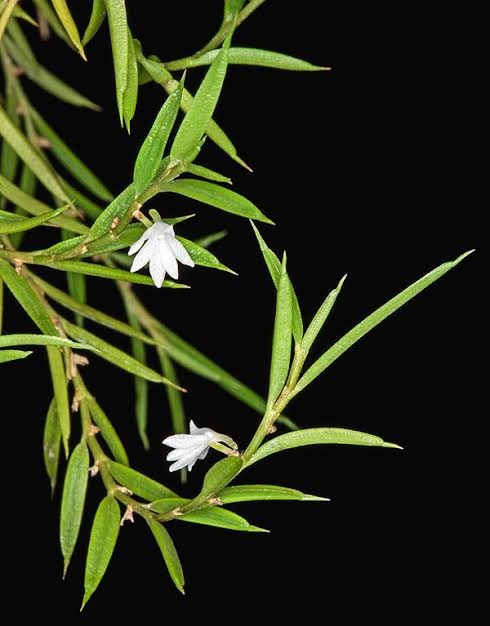
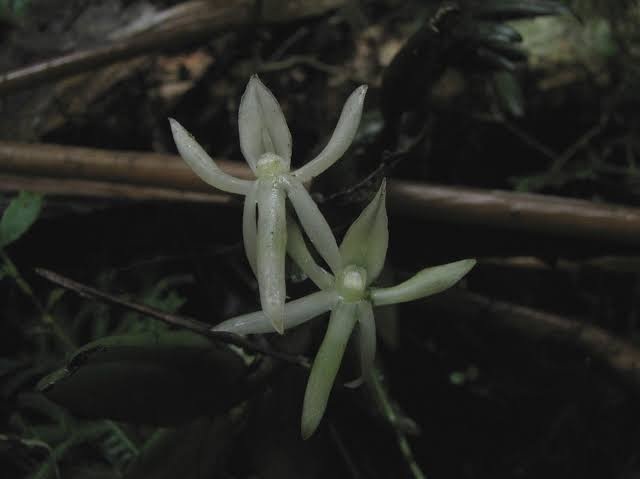
Field observations describe the plant as a small epiphytic subshrub reaching about 30 cm in height[3]. Leaves are distichous (arranged in two rows) as typical for the genus, though detailed leaf measurements are not available. The inflorescence is axillary, bearing one or a few flowers. Flowers are reported as white to greenish‑white, fragrant, and the plant blooms throughout the year[3][8]. Specific diagnostic characters such as lip shape, spur length, or flower dimensions have not been documented in the available sources, so identification should be confirmed with herbarium material or expert consultation.
Native Range and Habitat
Angraecum petterssonianum is known only from western Rwanda[1]. It occurs in wet tropical forest biomes, growing as an epiphyte on tree branches. The species is described as an epiphytic subshrub, indicating it does not form pseudobulbs and relies on atmospheric moisture and host tree bark for support. Elevational limits and precise forest type (e.g., montane vs. lowland) are not detailed in the cited references.
Species‑Specific Care
| Factor | Documented Guidance | Source |
|---|---|---|
| Growth habit | Epiphytic; mount on bark or grow in a well‑aerated orchid mix with coarse bark and charcoal. | [1][8] |
| Watering | Keep the medium consistently moist; the species shows low drought tolerance. | [8] |
| Humidity | Provide high humidity (≥70 %). | Not documented; inferred from native wet tropical forest. |
| Light | Bright, filtered light typical for forest epiphytes. | Not documented. |
| Temperature | Not documented; recommend moderate tropical temperatures (18–28 °C) pending further observation. | Not documented |
| Fertilisation | Use a balanced, diluted orchid fertilizer monthly during active growth. | Not documented. |
| Seasonal changes | Flowering reported throughout the year; no rest period documented. | [8] |
Because detailed cultural data are scarce, growers should monitor the plant closely for signs of desiccation or fungal problems, adjusting watering and airflow accordingly.

Flowering and Pollination
Native observations and cultivated reports indicate that Angraecum petterssonianum can flower in any month of the year[8]. Flowers are fragrant, a trait that often suggests moth pollination in the genus, but specific pollinator records for this species have not been published.
Conservation and Responsible Cultivation
No formal conservation assessment (e.g., IUCN Red List) or CITES listing specific to this species was found in the consulted sources. Given its limited known distribution, any collection from the wild should follow local regulations and best practices for sustainable orchid trade.
Evidence and Limitations
Most morphological details, precise habitat parameters, and comprehensive cultivation protocols are not documented in the available literature. Further field studies and horticultural trials are needed to refine identification keys, optimal growing conditions, and conservation status.
Frequently asked questions
What is the natural habitat of Angraecum petterssonianum?
It is an epiphytic orchid that grows on tree branches in wet tropical forest areas of western Rwanda, as recorded by Kew’s Plants of the World Online.
Does Angraecum petterssonianum flower year‑round?
Yes. Reports on NativePlants.info list blooming in all months of the year.
What are the basic cultural needs for this species?
Provide a mounted or bark‑based medium, keep it continuously moist (low drought tolerance), maintain high humidity, and supply bright filtered light. Detailed temperature and fertilisation guidelines are not documented.
FOLLOW THE EVIDENCE
Sources & references
- Angraecum petterssonianum Geerinck | Plants of the World Online | Kew Science, https://powo.science.kew.org/taxon/urn:lsid:ipni.org:names:940389-1
- Flora of Rwanda: Species information: Angraecum petterssonianum, https://www.rwandaflora.com/speciesdata/species.php?species_id=259340
- Angraecum petterssonianum (Angraecum petterssonianum) | NativePlants.info, https://www.nativeplants.info/plant/magnoliophyta-flowering-plants/orchidaceae/angraecum/angraecum_petterssonianum.html
- Angraecum petterssonianum in Genus Angraecum, https://plantaedb.com/taxa/phylum/angiosperms/order/asparagales/family/orchidaceae/genus/angraecum/species/angraecum-petterssonianum