At a glance
RECORDED PROFILE DATA- Scientific name
- Angraecum microcharis Schltr.
- Name status
- Accepted
- Native region
- Madagascar (northern)
- Growth habit
- Epiphytic subshrub
- Cultivation temperature group
- Not documented
Names and Taxonomy
Angraecum microcharis Schltr. is the accepted scientific name for this species. It was first described in Repertorium Specierum Novarum Regni Vegetabilis, Beihefte 33: 333 (1925) and is listed as an accepted name by the Royal Botanic Gardens, Kew [1]. A later homotypic synonym is Lesliegraecum microcharis (Schltr.) Szlach., Mytnik & Grochocka (2013), but Kew continues to recognise Angraecum microcharis as the correct name.
No common names are recorded in the available sources.
How to Identify This Species
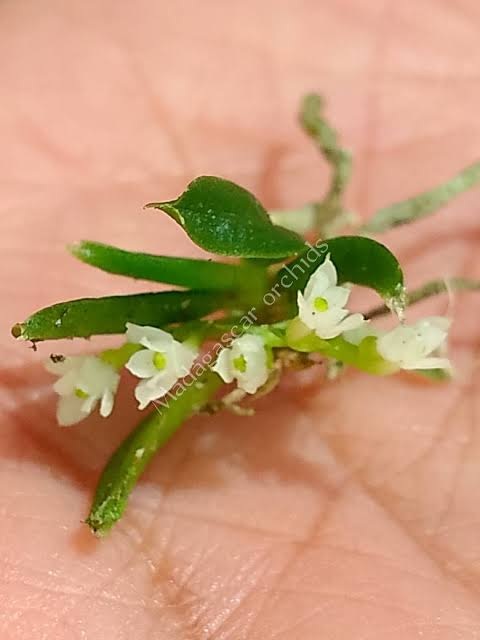
The published data for Angraecum microcharis is limited to its growth habit. Kew records it as an “epiphytic subshrub” growing in wet tropical forests of northern Madagascar. Detailed morphological descriptions (e.g., leaf size, flower colour, spur length) are not provided in the consulted sources, so reliable field identification requires consultation of specialist floras or herbarium specimens that are not currently available in the public domain.
In the absence of species‑specific characters, collectors should compare specimens with closely related members of the genus that share a northern‑Madagascar distribution, but any visual diagnosis should be confirmed by a qualified orchid taxonomist.
Native Range and Habitat
Geographic distribution: The species is native to the northern part of Madagascar [1]. No records of naturalised or introduced populations are documented.
Habitat: It occurs in wet tropical forest biomes, typically as an epiphyte on tree branches or trunks. The specific host tree species, elevation range, and micro‑climatic preferences have not been documented.
Species‑Specific Care
| Factor | Documented guidance | Source |
|---|---|---|
| Growth habit | Epiphytic subshrub; can be mounted or grown in a well‑draining orchid mix. | [1] |
| Light | Not documented for this species. | Not documented |
| Temperature | Not documented; growers often treat northern‑Madagascar Angraecum as intermediate to warm. | Not documented |
| Watering | Not documented; typical Angraecum practice is regular watering with good drainage. | Not documented |
| Humidity | Not documented; wet tropical origin suggests a preference for high humidity. | Not documented |
| Fertilisation | Not documented. | Not documented |
| Rest period | Not documented. | Not documented |
Because specific cultural requirements are lacking, growers are advised to follow general Angraecum guidelines: provide bright, filtered light; maintain moderate to high humidity; use a coarse, well‑aerated medium; and water when the medium begins to dry near the surface. Monitor the plant for signs of stress and adjust conditions accordingly.
Flowering and Pollination
No published information on the flowering period, flower morphology, fragrance, or pollinators of Angraecum microcharis is available in the sources consulted.
Evidence and Limitations
The profile relies principally on the Kew Plants of the World Online entry for this species. Detailed morphological, phenological, and horticultural data are not documented in the accessible references, so many sections contain “Not documented”. Further research in regional floras, herbarium records, or peer‑reviewed studies would be needed to complete a comprehensive species account.
FOLLOW THE EVIDENCE
Sources & references
- Angraecum microcharis Schltr. – Plants of the World Online, Royal Botanic Gardens, Kew, https://powo.science.kew.org/taxon/urn:lsid:ipni.org:names:616261-1