At a glance
RECORDED PROFILE DATA- Scientific name
- Angraecum tenuifolium Frapp. ex Cordem.
- Name status
- Accepted name
- Native region
- Réunion
- Growth habit
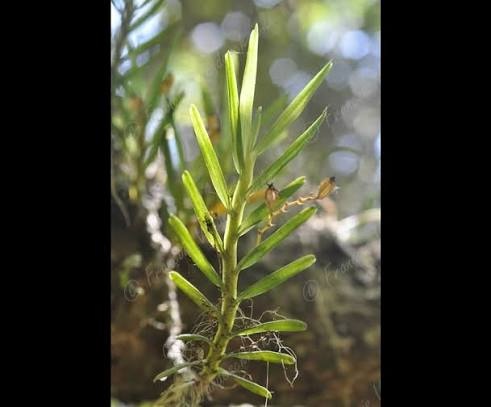
- Epiphytic subshrub
- Cultivation temperature group
- Not documented
Names and Taxonomy
Angraecum tenuifolium Frapp. ex Cordem. was first published in Fl. Réunion 207 (1895) and is accepted as the correct name for this species according to Kew’s Plants of the World Online[1]. A homotypic synonym recorded is Lepervenchea tenuifolia (Frapp. ex Cordem.) Cordem. (1899)[1]. The species is endemic to Réunion and does not have widely used common names in the cited literature[3].
How to Identify This Species
Detailed morphological description (leaf size, flower colour, spur length, etc.) is not provided in the sources consulted. The species is described generally as an epiphytic subshrub growing in wet tropical forest[1], but specific diagnostic characters are not documented here. Accurate identification therefore requires reference to a specialist flora or herbarium specimen.
Native Range and Habitat
The only documented native range for Angraecum tenuifolium is the island of Réunion (Mascarene Islands)[1][2]. It occurs in natural forest and shrubland habitats, with 78 % of recorded observations occurring in “forests and shrublands” according to the Réunion biodiversity portal[2]. The species is epiphytic, growing on tree branches in the wet tropical biome of the island[1]. Elevational limits are not specified in the available sources.
Species-Specific Care
| Factor | Documented Guidance | Source |
|---|---|---|
| Temperature | Not documented | — |
| Light | Not documented | — |
| Watering | Not documented | — |
| Humidity | Not documented | — |
| Substrate / Mounting | Epiphytic habit suggests mounting on bark or using a very coarse, well‑draining mix, but specific recommendations are not documented. | — |
| Feeding | Not documented | — |
| Repotting | Not documented | — |
| Seasonal changes | Not documented | — |
Because the species is rare and legally protected (see Conservation section), growers should obtain material only from reputable, legally compliant sources and follow any national regulations. In the absence of species‑specific horticultural data, cultivation should aim to mimic its natural epiphytic environment: high humidity, bright filtered light, and good air circulation.
Flowering and Pollination
No information on flowering time, flower morphology, fragrance, or pollinators is available in the consulted references.
Conservation and Responsible Cultivation
According to the Mascarine flora index, Angraecum tenuifolium is classified as “EN” (threatened with extinction) and is protected under regional decree (R1) since 1987[4]. It is listed on CITES Appendix II, regulating international trade[4]. Conservation status underscores the importance of preserving its natural habitat and ensuring any cultivated specimens are sourced legally.
Evidence and Limitations
The profile is based on taxonomic and distribution data from Kew (POWO) and the Réunion biodiversity portal. Detailed morphological, phenological, and horticultural information was not found in the available sources, and therefore many sections contain “Not documented”. Further field studies and specialist literature would be needed to complete the species description and cultivation guide.
FOLLOW THE EVIDENCE
Sources & references
- Angraecum tenuifolium Frapp. ex Cordem. | Plants of the World Online | Kew Science, https://powo.science.kew.org/taxon/urn:lsid:ipni.org:names:616449-1
- Angraecum tenuifolium | atlas - SINP de La Réunion, https://geonature.borbonica.re/atlas/espece/705857
- Angraecum tenuifolium – Wikipedia, https://fr.wikipedia.org/wiki/Angraecum_tenuifolium
- Index de la flore – Mascarine, https://mascarine.cbnm.org/index.php/flore/index-de-la-flore/nom?code_taxref=705857