At a glance
RECORDED PROFILE DATA- Scientific name
- Angraecum eichlerianum Kraenzl.
- Name status
- Accepted (Kew POWO)
- Native region
- West-Central Tropical Africa (Nigeria to Angola)
- Growth habit
- Epiphytic vining orchid (subshrub)
- Cultivation temperature group
- Warm to hot (≈10–30 °C)
How to Identify This Species
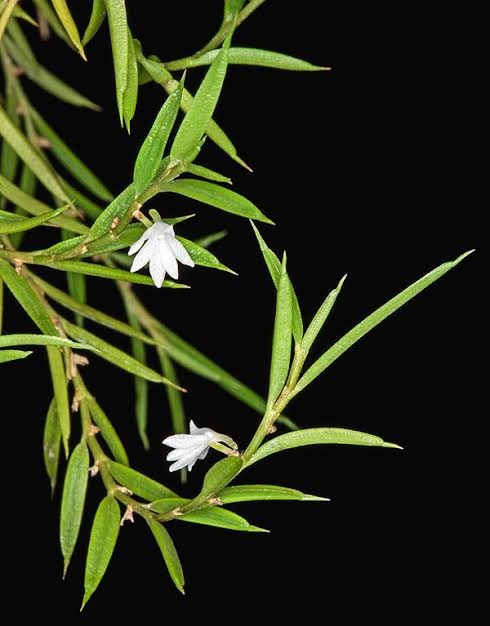
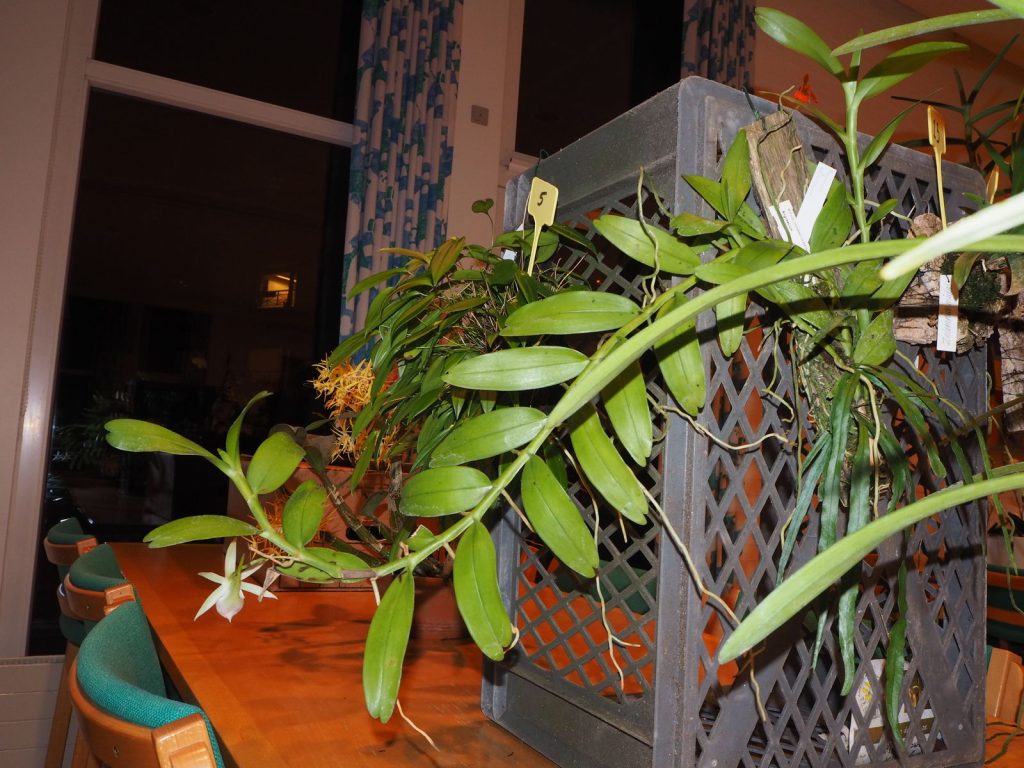
Angraecum eichlerianum is a monopodial, vining epiphyte that can reach 5 m (≈500 cm) in length in the wild [5]. Stems are slender and erect, bearing numerous narrow, elliptic‑oblong leaves that vary from 1.5 cm to 15 cm long [5]. Roots are thick, aerial, and adapted to cling to bark. The inflorescence is a short, wiry raceme 10–20 cm long, typically bearing one to two large flowers.
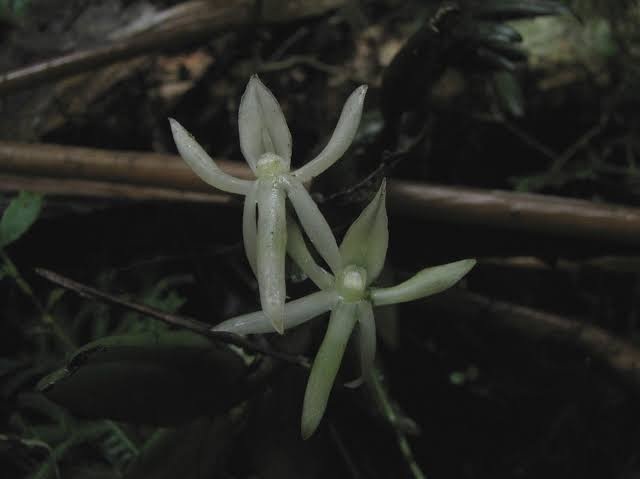
The flowers are notable for their size (about 7.5 cm or 3 in across) and a long, narrow nectar spur 3–4 cm (1¼–1¾ in) in length [6]. Sepals and petals are pale green, while the lip is white and often described as heavily textured. Fragrance is sweet, reminiscent of jasmine or lily [6][3]. The combination of a white lip, long spur, and strong night fragrance distinguishes it from the similar Angraecum birrimense, which has slightly smaller flowers and a less projecting labellum [6]. Because many Angraecum species share a vining habit, flower morphology (size, spur length, lip shape) is essential for reliable identification.
Native Range and Habitat
The species occurs in the lowland wet tropical forests of West‑Central Africa. Documented countries include Angola, Cameroon, Central African Republic, Congo, Democratic Republic of the Congo, Equatorial Guinea, Gabon and Nigeria [1]. It is an epiphytic subshrub that grows on the trunks and large branches of mature trees in humid, undisturbed forest canopies, typically at elevations around 150 m (≈500 ft) above sea level [3][6]. The habitat is characterised by high humidity, consistent moisture, and a warm climate with little seasonal temperature fluctuation.
Species‑Specific Care
| Factor | Documented guidance | Evidence |
|---|---|---|
| Light | Bright indirect light or deep shade; 900–1500 foot‑candles (≈3000–5000 lux) works well. | [5] |
| Temperature | Warm to hot conditions, roughly 10–30 °C (50–90 °F). The species tolerates intermediate temperatures but thrives in the warmer part of that range. | [5] |
| Humidity | High humidity, ideally 70–85 % (reported 76–84 %). | [5] |
| Air movement | Good airflow to prevent fungal buildup; a gentle breeze mimics forest conditions. | [11] |
| Watering | Keep the medium consistently moist but never water‑logged. Daily watering in warm weather is recommended; allow the surface to dry slightly between waterings. | [5][8] |
| Substrate / Mounting | Well‑draining bark mix or coarse orchid medium; the plant also performs well mounted on cork or tree bark as long as water is supplied regularly. | [8][11] |
| Fertiliser | Regular application of a balanced orchid fertilizer; during active growth prefer a low‑nitrogen formulation to encourage blooming. | [11] |
| Repotting | Not documented; repot when the bark medium breaks down or the plant outgrows its container. | Not documented |
| Seasonal cues | A cooler night period (drop of a few degrees) can help trigger flower bud formation. | [11] |
In practice, growers report successful cultivation in greenhouse or indoor settings that can maintain the above parameters. Because the species originates from constantly humid forests, it does not tolerate prolonged drying of roots.
Flowering and Pollination
In the northern hemisphere the plant typically blooms from July through December, with a peak in October [3]. Individual flowers are long‑lasting, persisting several weeks, and emit a strong jasmine‑like fragrance in the evenings. The long nectar spur (3–4 cm) suggests pollination by long‑tongued moths, a pattern common in the genus, but specific pollinator observations for this species have not been published Not documented.
Conservation and Responsible Cultivation
The species appears in the Kew CITES Orchid Checklist, confirming it is recognised under CITES regulations, though the exact appendix listing is not specified in the available source [7]. Collectors should ensure that any material is sourced from reputable growers who comply with national and international trade regulations.
Evidence and Limitations
Most morphological data (flower size, spur length, leaf dimensions) come from horticultural descriptions and photographic captions rather than formal taxonomic monographs. Precise elevation limits, population status, and pollinator identities remain undocumented in the supplied sources. Care recommendations are based on grower observations; they may vary with local climate and facility conditions.
Frequently asked questions
What light conditions does Angraecum eichlerianum need?
It prefers bright indirect light or deep shade, with an intensity of about 900–1500 foot‑candles (≈3000–5000 lux). This mimics the filtered light of its forest canopy habitat. [5]
How often should I water this orchid?
Keep the medium consistently moist but avoid water‑logging. In warm conditions daily watering is advisable; allow the surface to dry slightly between applications. [5][8]
When does Angraecum eichlerianum flower in cultivation?
In the northern hemisphere it typically flowers from July to December, with a peak in October. [3]
Is Angraecum eichlerianum listed under CITES?
The species appears in the Kew CITES Orchid Checklist, confirming it is covered by CITES regulations, though the specific appendix is not indicated in the source. [7]
FOLLOW THE EVIDENCE
Sources & references
- Plants of the World Online – Angraecum eichlerianum Kraenzl. (Kew Science) https://powo.science.kew.org/taxon/616100-1
- Plants of the World Online – Angraecum eichlerianum var. eichlerianum (Kew Science) https://powo.science.kew.org/taxon/urn:lsid:ipni.org:names:77167563-1
- Smithsonian Gardens – Angraecum eichlerianum (object details) https://gardens.si.edu/collections/explore/object/ofeo-sg_2014-0954A
- Orchids.org – Angraecum eichlerianum species page https://www.orchids.org/grexes/angraecum-eichlerianum
- orchid.guru – Angraecum eichlerianum profile https://orchid.guru/content/orchids/a/angraecum/eichlerianum/
- IOSPE PHOTOS – Angraecum eichlerianum description http://www.orchidspecies.com/angreichlerianum.htm
- Botanapp – How to Care for Angraecum eichlerianum https://botanapp.com/plant/angraecum-eichlerianum
- CITES Orchid Checklist – Kew (PDF) https://www.kew.org/sites/default/files/PART_II_Names_in_current_use.pdf